
Dreamforce 2026 brought plenty of announcements for marketers: Palmata, Campaign Agent, Agentic Content, Piper, Hunter from Qualified and more. But behind all those features, I saw something surprisingly simple. A marketing funnel for the agentic era:
GET KNOWN → MANAGE THE RELATIONSHIP → OUTCOMES
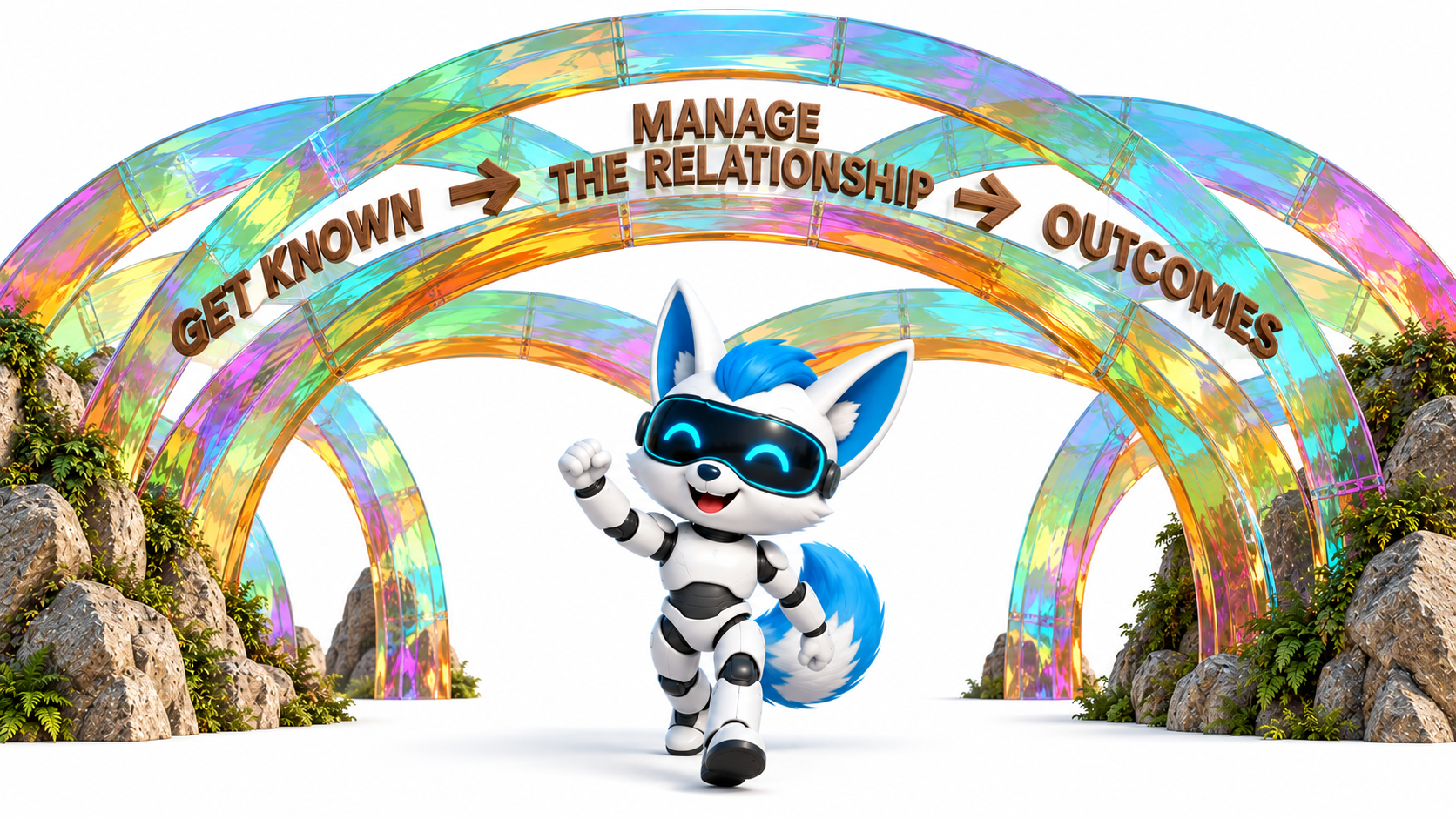
That’s it. Of course, real customer lifecycles look nothing like that straight line. People move forward, backward, disappear and come back. They can engage with several campaigns at once. A purchase isn’t the end of the relationship, but new context for whatever happens next.
For years, we tried to reproduce that complexity inside our marketing automation platforms. More segments. More scores. More branches. More triggers. More journeys. More re-entry rules. The closer we tried to get to the real customer lifecycle, the more complex our marketing machinery became, and the more work it took to build and maintain.
AI changes that equation. The marketer can increasingly focus on what should happen: the goals, the context, the guardrails and the desired outcomes, rather than trying to anticipate every possible path a customer could take.
The lifecycle isn’t linear. But our strategy doesn’t need to model every twist and turn anymore. Customer journeys didn’t get simpler. AI means marketing can. And when you look at the Dreamforce Marketing Keynote through that lens, many of the announcements suddenly fit together.
Get Known - Discovery is changing
70% of consumers use AI search for top-of-funnel questions.
And customers can now discover, and even decide, without ever reaching your website. That fundamentally changes the first job of marketing. Being visible in search results is no longer enough. Brands increasingly need to understand how they appear in AI-generated answers.
That’s where Palmata comes in. It helps marketers monitor and understand what AI engines say about their brand and improve their visibility in those answers (AEO, Answer Engine Optimization). Palmata suggests how you could improve your existing content to perform better, and these improvements can be pushed to Contentful headlessly (from any AI).
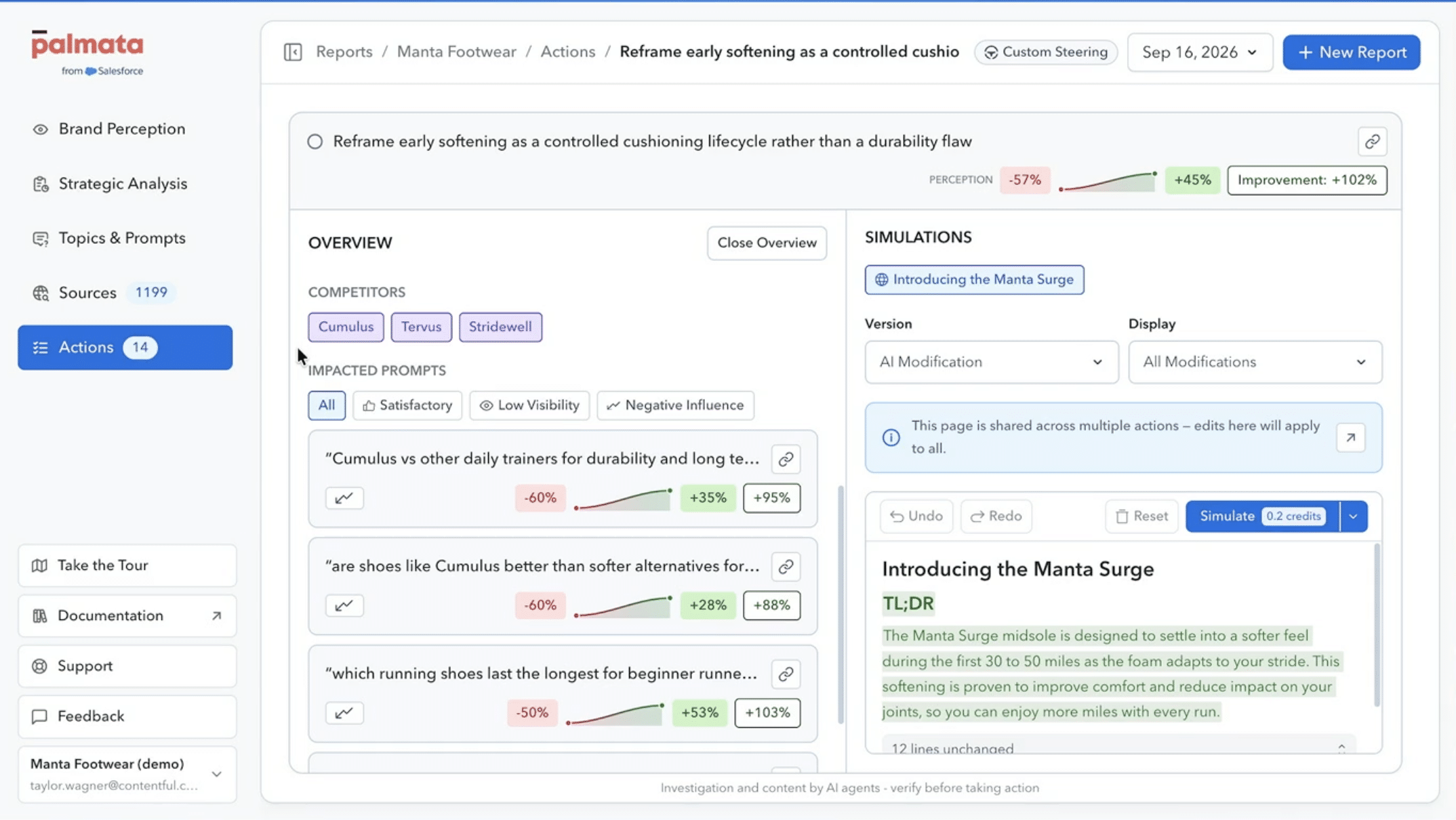
The technology is new. The marketing objective isn’t: Get Known.
Manage the relationship - stop defining every path
Once someone knows you, marketing gets complicated. They visit, leave, come back. They open an email but don’t click. They show intent, lose interest, buy, buy again. Customer lifecycles aren’t linear.
Until now, marketing automation dealt with that complexity by asking marketers to anticipate it: segments, triggers, branches, scores, re-entry rules and increasingly sophisticated journeys.
We tried to predefine every path because our technology couldn’t decide what should happen next.
This is where the Dreamforce announcements become interesting. Campaign Agent, Agentic Content, Piper and Hunter approach the problem from different angles, but they point in the same direction: give AI the goal, customer context, signals and guardrails, and let it increasingly adapt what happens next.
The marketer still defines the strategy. AI adapts the path.
Campaign Agent - Campaigns become goals
This new feature is coming in October ’26 and represents a major breakthrough in agentic marketing.
“Campaign” has always been one of the most loved and hated words in a marketer’s vocabulary. Because behind every new campaign was a new execution plan: audiences, content, channels, journeys, timing, triggers, testing…
With Campaign Agent, the starting point changes. You define a campaign by its goal. AI helps turn that goal into execution and adapt the path along the way. New campaign → new goal. That may sound like a small change. It isn’t. It moves marketers from defining every step of the execution to defining what they want to achieve.
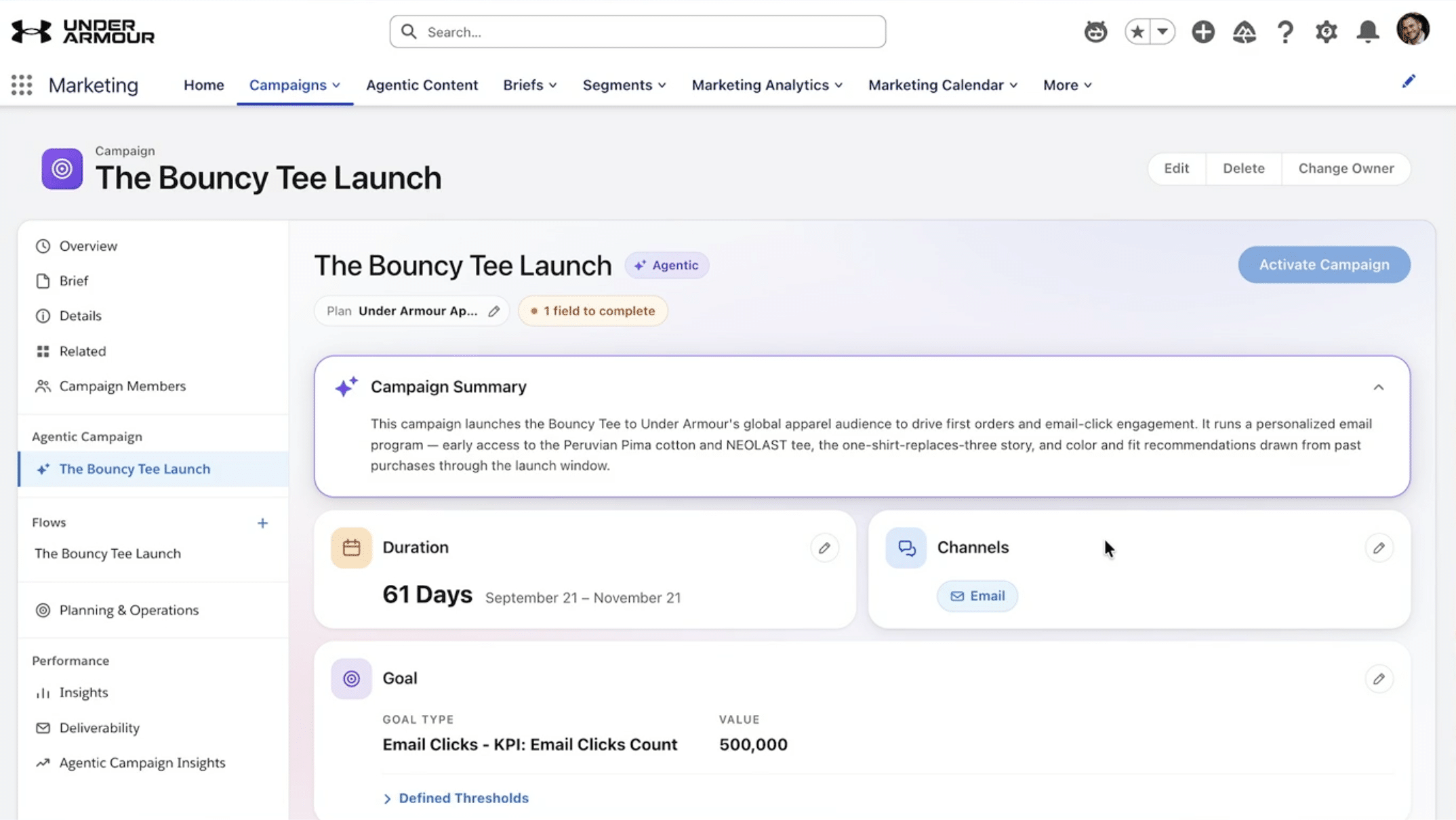
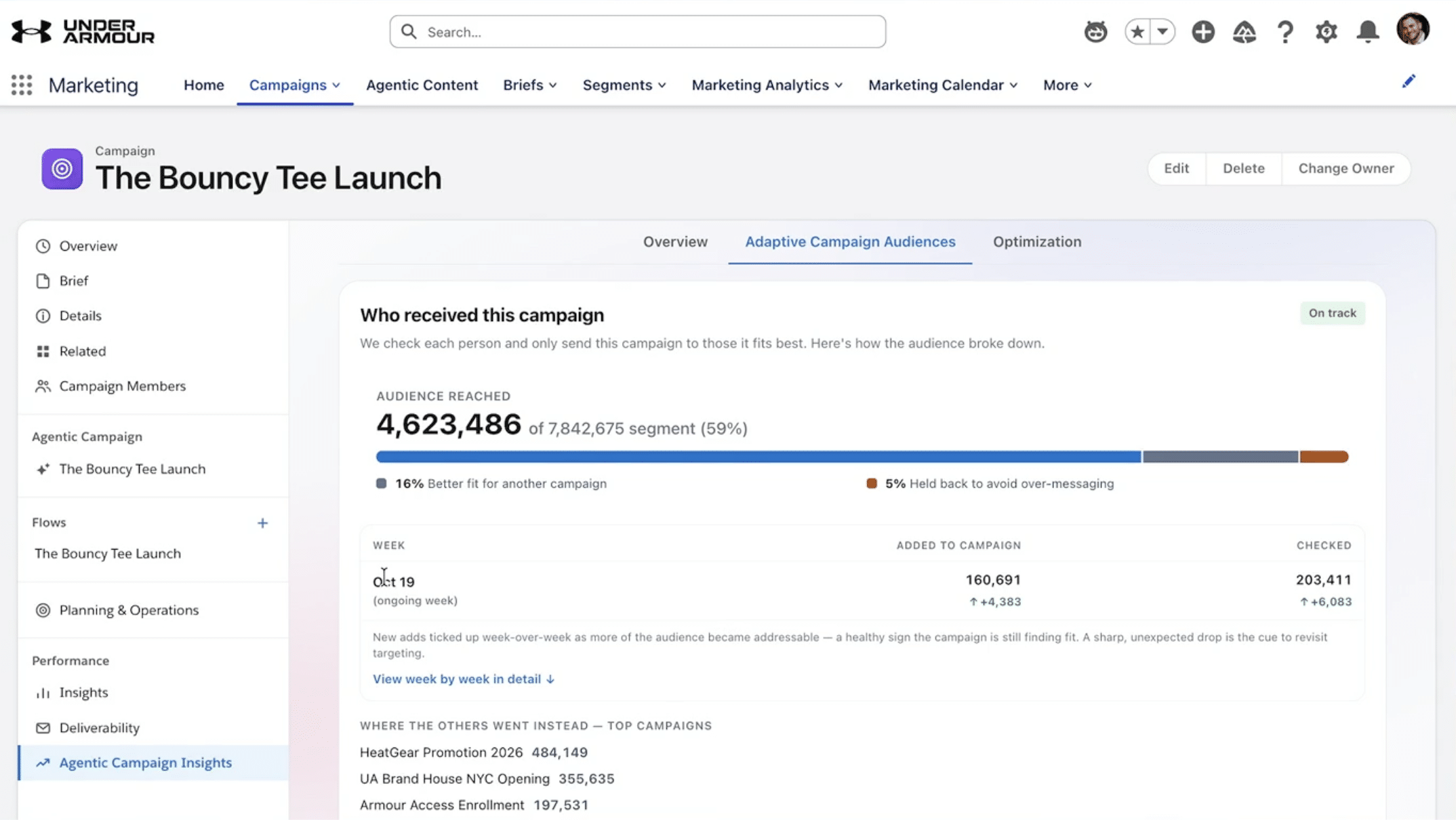
Adaptive Campaign Audience is a whole new concept. With Campaign Agent, every Campaign is now always-on, and the Adaptive Audience creates with AI a dynamic list of eligible recipients that may be added to the Campaign now or later.
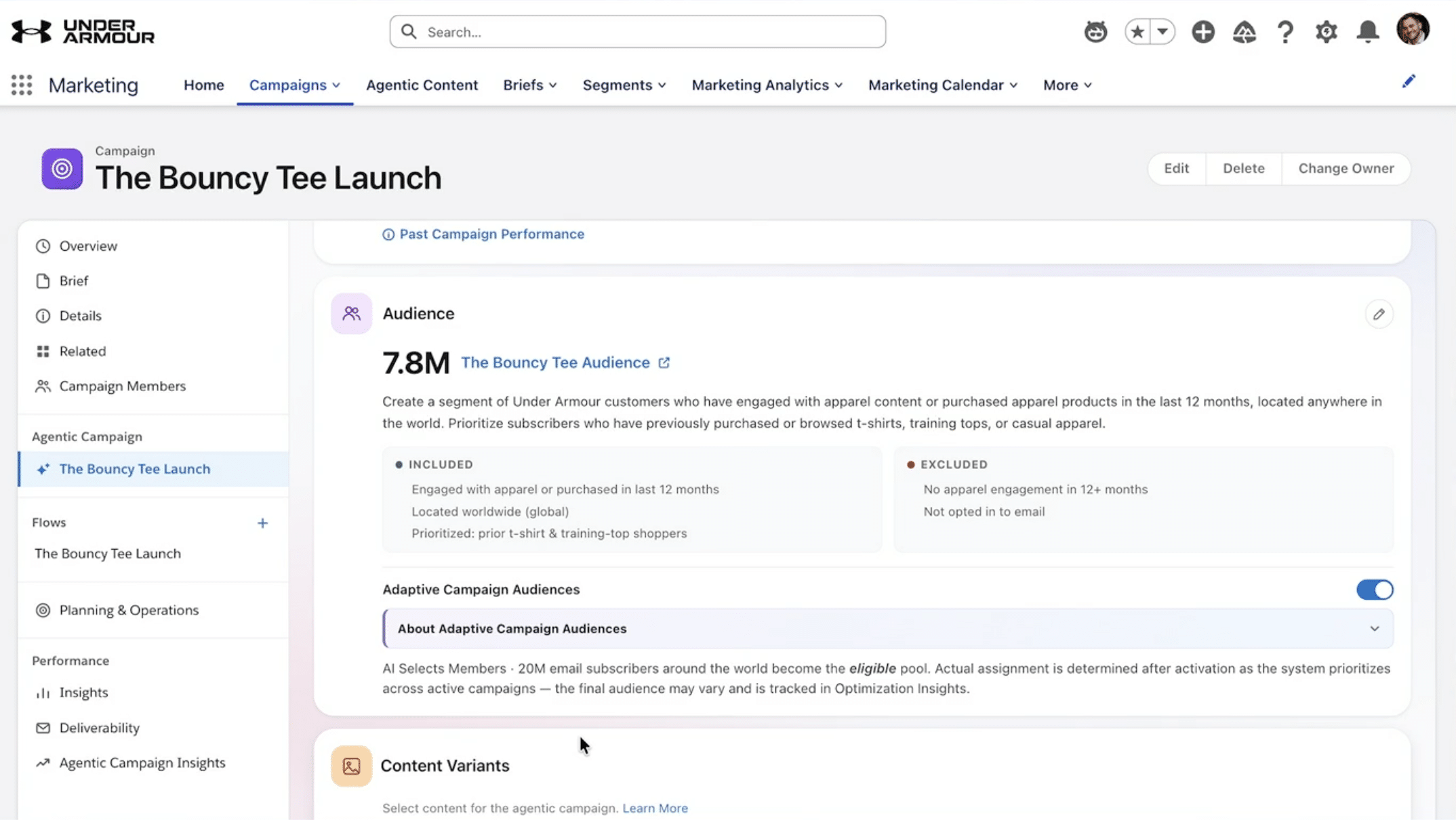
Then you need some content. All the information you have so far from the Campaign phase is passed to the new Agentic Content, which will generate multi-channel variations that you can edit, refine and translate. Contentful can also be queried to get relevant approved content.
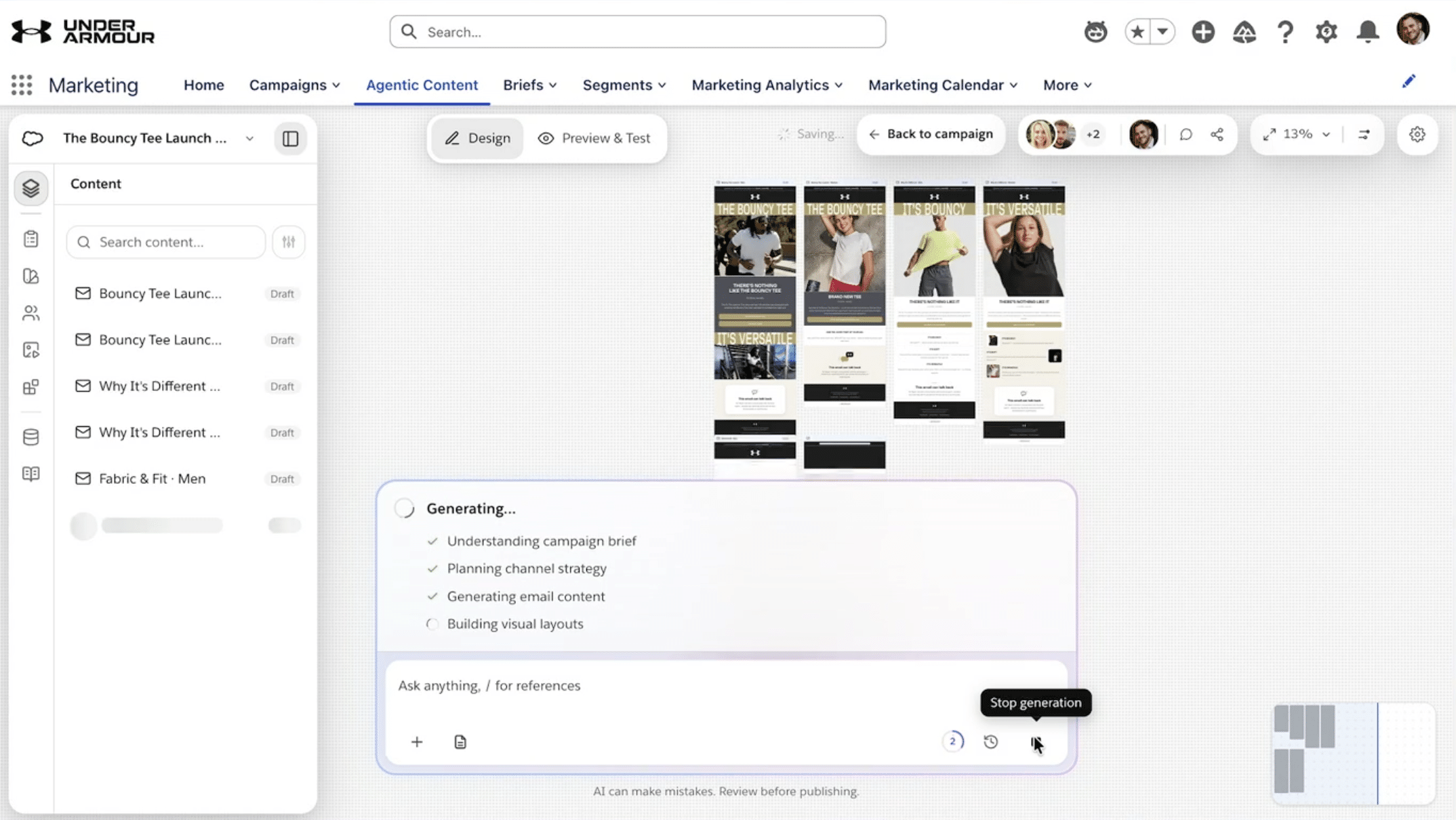
So, you create your campaigns around your goals, and Campaign Agent guides you through every step, including content creation.
But the real breakthrough comes with Campaign Prioritization, powered by Adaptive Audiences. Your campaigns can now run in the background, with AI continuously evaluating customer context and signals to determine which campaign is relevant for each individual, and when.
Think about what this means: instead of defining the path and pushing individuals through it, you define the goals and let AI adapt the path. And that is the whole point.
Qualified - Signals become actions
Campaign Agent starts with the marketer’s goal. But the relationship also works the other way around: customers constantly send signals.
They visit your website, come back, explore a product, engage with content or show increased interest. Traditionally, marketers tried to translate those signals into predefined actions using scores, segments, triggers, nurture programs and handoff rules.
With Qualified, and agents like Piper and Hunter, those signals become context AI can act on. Piper can engage an inbound visitor, understand their intent and adapt the conversation in real time. Hunter takes a more proactive approach, identifying and engaging relevant prospects over time.
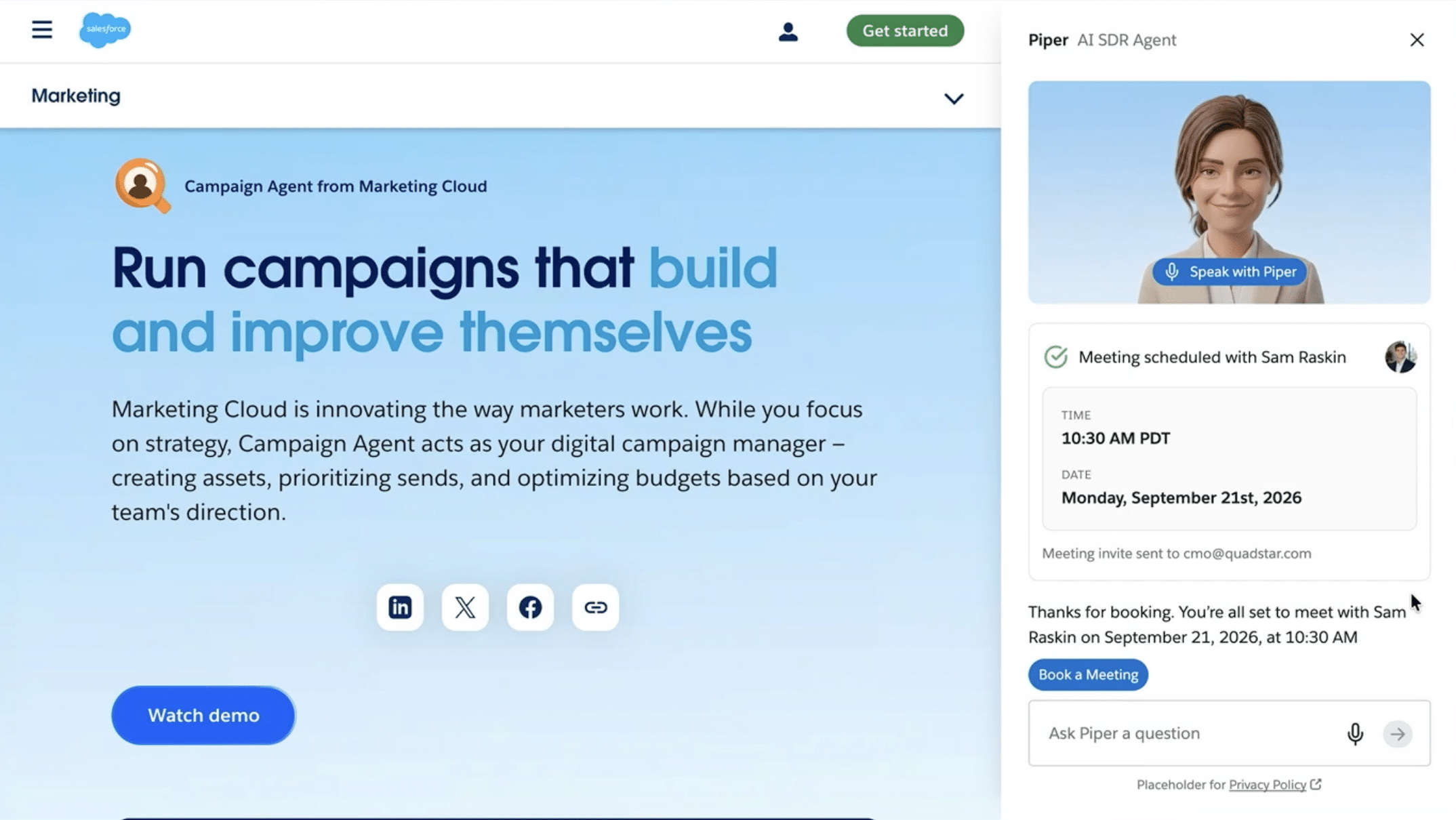
And Piper goes beyond conversation. It can surface relevant content and documents directly within the experience, based on what the visitor actually needs. It even makes you wonder whether the traditional form is becoming a legacy experience (thanks Tammy for our chat on this). Why ask everyone to follow the same predefined interaction, fill in these fields, submit, wait for the next step, when an agent can have a conversation, understand the context, provide what’s needed and move the relationship forward?
Again, the important part isn’t just automation. It’s replacing predefined interactions with adaptive ones. Campaign Agent starts with a goal and finds the right individual and moment. Qualified starts with an individual’s signals and determines the right action and moment.
Different starting points. Same fundamental shift: you define the strategy. AI adapts the path.
Outcomes - The Relationship Doesn’t End
Eventually, marketing needs to deliver outcomes. A purchase. A meeting. A signup. An upgrade. A renewal. Whatever success means for your business.
But an outcome isn’t the end of the relationship. It’s new context. A purchase changes what the customer might need next. A meeting changes what you know about a prospect. A renewal opens another chapter in the relationship. And those outcomes become new signals that AI can use to decide what should happen next. That’s why our funnel can remain surprisingly simple:
GET KNOWN → MANAGE THE RELATIONSHIP → OUTCOMES
The customer lifecycle isn’t linear. It can move forward, backward and loop endlessly. The funnel defines the strategy. AI adapts the path.
What This Changes for Marketers and Partners
Agentic marketing changes the division of labor. Marketers increasingly define the goals, context, guardrails and outcomes, while AI handles more of the execution and decisions in between.
When execution becomes easier, strategy matters even more. And that shift also changes the role of consultants and partners. Less value will come from simply building segments, journeys and automations. More will come from strategy, architecture, data, integration and governance, creating the foundations that allow agents to make the right decisions.
And this is what excites me most about what we saw at Dreamforce. Customer journeys aren’t getting simpler. But for the first time, we may not need to model all that complexity ourselves. The customer can take a thousand different paths. We don’t have to build a thousand different paths anymore. That’s not just better automation. That’s a real breakthrough in how we can think about, and execute, marketing.
And don’t worry, we’ll still get technical. As soon as we get our hands on these new features, we’ll dive deep into them, TAM style.